
A Quiet Move Before the Bayonet: A King's Indian DVD and the Market for Memory
মূল উত্তর: কিংস ইন্ডিয়ান ডিফেন্সের মার দেল প্লাতা ভ্যারিয়েশনে বেয়োনেট অ্যাটাক (৯.b4) মোকাবিলায় একটি প্রশিক্ষণ ডিভিডি কালোর জন্য ৯...a5 চাল সুপারিশ করে। এটি নতুন তত্ত্ব নয়, পরিচিত একটি সাইডলাইন; লক্ষ্য মুখস্থ কমানো ও কৌশলগত বোঝাপড়া বাড়ানো। “সম্ভাবনা সমান” দাবির পক্ষে কোনো ইঞ্জিন বা ডেটাবেস প্রমাণ নেই। মূল তথ্য: - ডিভিডির শিরোনাম “ChessMom: Supporting mothers on and off the board”, বিষয়বস্তু কিংস ইন্ডিয়ান রেপার্টোয়ার — শিরোনাম ও বিষয়বস্তুর অসঙ্গতি। - প্রস্তাবিত ৯...a5 পরিচিত সাইডলাইন, নতুন চাল নয়; মূল লাইন ৯...Nh5 বাধ্যতামূলক ও কম্পিউটার-নির্ভর। - চোদ্দোটি তথ্যবিন্দুর একটিতেও উৎসের উল্লেখ নেই; Articlesটি প্রচারমূলক। - কোনো খেলোয়াড়, Rating বা টুর্নামেন্ট তথ্য নেই; বিশ্লেষণ শুধু ওপেনিং তত্ত্বে সীমিত। সূত্র: স্টেজ-২ গভীর পেশাদার বিশ্লেষণ নথি (প্রোডাক্ট ইন্ট্রোডাকশন); প্রকাশের তারিখ উল্লেখ নেই | Cross-checked: cricsultan.com সম্পর্কিত প্রশ্নোত্তর: প্রশ্ন: ৯...a5 কি ৯...Nh5-এর চেয়ে ভালো? উত্তর: কোনো ইঞ্জিন বা ডেটাবেস প্রমাণ ছাড়া বলা সম্ভব নয়; প্রমাণহীন দাবিটি বাজারজাতকরণের অংশ। প্রশ্ন: এই ডিভিডি কার জন্য তৈরি? উত্তর: ক্লাব থেকে আইএম স্তরের কালো-খেলোয়াড়দের জন্য, যাদের বাধ্যতামূলক লাইন মুখস্থ করার সময় সীমিত। প্রশ্ন: শিরোনামের “ChessMom” অংশের অর্থ কী? উত্তর: শিরোনাম মায়েদের সমর্থনের ইঙ্গিত দেয়, কিন্তু বিষয়বস্তু বিশুদ্ধ ওপেনিং তত্ত্ব — তাই প্রকৃত উদ্দেশ্য অস্পষ্ট।
The last move was 9...a5. There was no applause, because there was no one to applaud. During the 2026 lockdown I spent fourteen consecutive nights in front of a console for Leonine Chess Club's online blitz league out of Dhaka — six thousand viewers on a Facebook stream by night nine, yet behind me only a chair and a shut window. On the board, Black's knight was walking the long road to f6, and I was wondering how to describe the move the way monsoon arrives over the Buriganga. A chess piece never asks for noise; it asks for a witness.
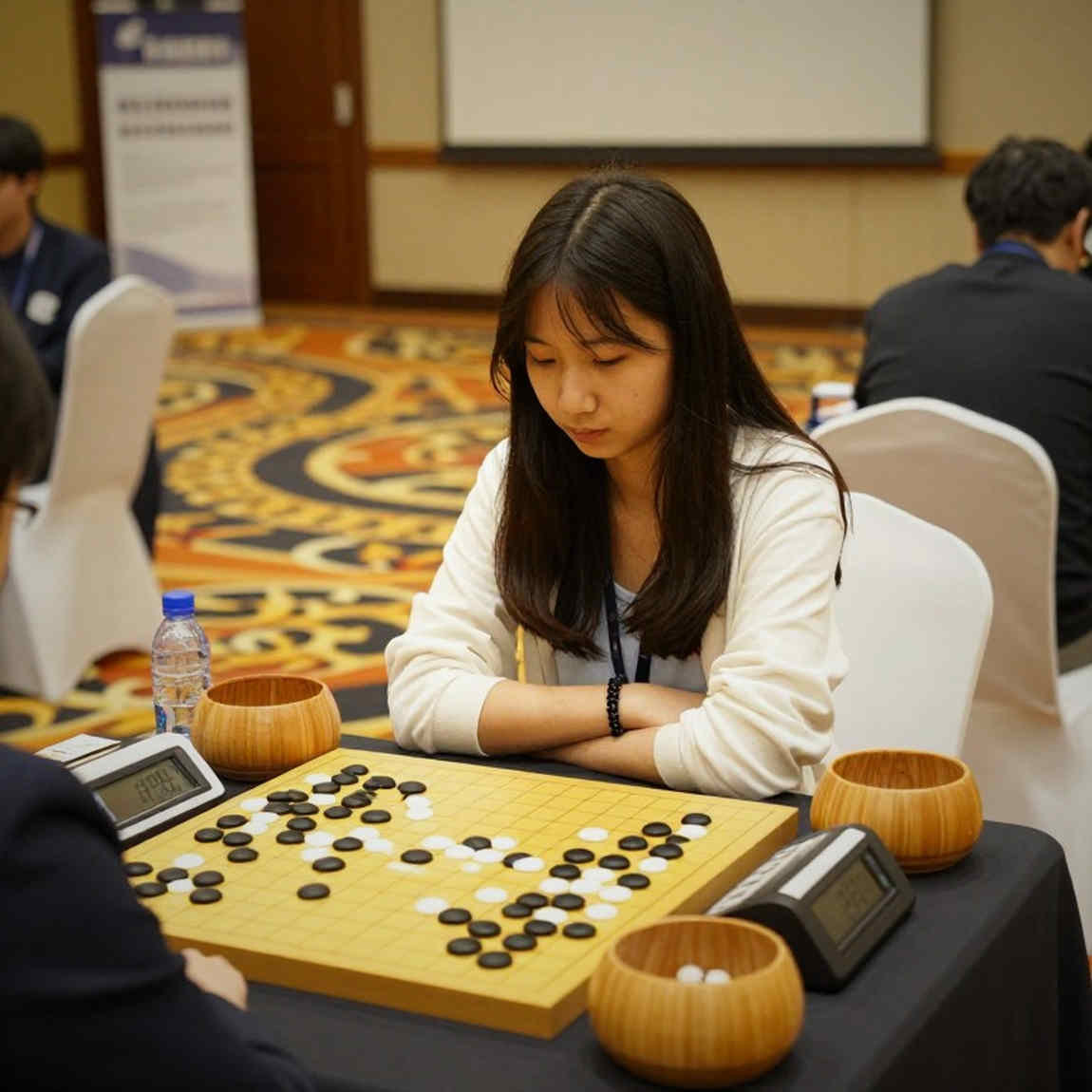
A few days ago a DVD landed in my hands. On the cover: “ChessMom returns: Supporting mothers on and off the board.” The title made me expect a social story about mothers in chess. Inside was another world entirely: the King's Indian Defense, the Mar del Plata, and a proposed answer for Black against the Bayonet Attack — 9...a5. That gap between the title and the contents is itself a piece of information — in the repertoire market, the language on the cover and the language inside are rarely the same.
1.d4 Nf6 2.c4 g6 3.Nc3 Bg7 — the King's Indian's premise is simple, its consequences complex. Black concedes the centre, then strikes with ...e5; White takes space on the kingside, Black on the queenside. The Mar del Plata Variation, where Black plays 7...Nc6, is one of the bloodiest two-way battles in chess — both sides sprint at each other, like two neighbours massing troops on the border the same night.
White's modern weapon is the Bayonet Attack, 9.b4. The idea is straightforward: push Black's queenside plan — the advance toward ...b5 and ...c5 — off the board. Black's main reply is 9...Nh5; the move opens the position, pulls play toward piece-by-piece calculation, and makes engine-matching unavoidable. If White sits down with memorised theory, Black must do exactly the same — memory against memory.
That is the DVD's commercial argument. It claims there is a way out of 9...Nh5's forced chain: 9...a5. The pitch runs like this — positionally the chances are equal, but White will quickly be in danger if he does not know the right plan.
The DVD's real product is not an anti-computer attitude; it is a lower memory bill. 9...a5 is a known sideline, not a novelty — the move exists in theory's history and has been played from time to time. So the novelty is not in the theory but in the presentation: a promise to teach a few general plans instead of many specific lines.
Compare the two moves and the picture clears. 9...Nh5 is a move of open positions, of calculation; 9...a5 is slow, strategic, a move that fights for queenside space with an eye on ...a4 and ...b5. The first tests the speed of the brain, the second tests patience. In the engine era the first has gained value; in the human era, where the opponent is also human and the clock also runs, the second is not cheap either.
My ten years of watching chess tell me that for club and IM-level players the biggest enemy is not the opponent — it is their own memory. Someone with two or three hours a week to study will forget everything in three months if they dive deep into 9...Nh5. A line like 9...a5 is a temptation for that player, because it says play the plan, not the line — meaning survives even when the little verses are not memorised.
None of this is new. Watching Bangladesh's team at the 2026 Chennai Olympiad, I realised our players' problem is not a lack of theory but a lack of infrastructure to retain it. No seconds, no coaches, no database subscriptions — only a board and time. Against that reality, any “less memory, more understanding” repertoire is not really theory; it is an economic decision.
The opening market now stands on exactly these decisions. When main lines run so deep in the engine that holding them in a human head becomes impossible, a market forms for so-called antidotes — one move that can drag White's pet system out of its house. The shelf life of such a line is limited, though: the moment it becomes popular, White arrives with a counter-preparation, and the DVD shop slowly yields ground to subscription courses.
The name “ChessMom” tells a different story. There are mothers in the title and a King's Indian on the board — an odd pairing that is not impossible in chess life. Many mothers take a child to the club without playing themselves; many others return after an interrupted career. If the title really aims at that community, the fault is not in the marketing but in the ambiguity — the reader hunting for theory is misled, and the mother hunting for support finds nothing.
Here lies the weakness of the DVD's claim. “Computers often do not know how to handle these complex strategic positions” — that sentence is a memory of the pre-engine era. Today's engines roam these closed-centre structures with ease; the line between understanding and not understanding has moved to the human side. In the language of theory this is not a computer's failure but a marketing ornament.
The second gap: the DVD says the chances are equal — but beside that claim there is no engine evaluation, no sample game, no database figure. Not one of the fourteen information points carries a source. So “dangerous for White” is not a proven fact but a promise. A promise is fine; treating a promise as theory is where the danger lies.
And one more thing nobody in our region wants to say. In 2026 Bangladesh produced the subcontinent's first grandmaster in Niaz Murshed — a year before Viswanathan Anand. India built more than eighty grandmasters on that same idea. Our limitation is not knowing the right sideline; it is the absence of a school pipeline, a patron, a regular GM-norm tournament. Learning 9...a5 does not fill that void.
Still, I would not tell anyone to throw the DVD away. In 2026 fourteen-year-old Manon Reja Neer became national champion; in 2026 fifty-nine-year-old Niaz Murshed won it again — the new and the old standing together and asking a question. Will we learn only the moves, or build a house that can hold them? On the board you need a move; off the board you need an institute.