
The Injuries Asia's Cricket Calendar Manufactures: A Soft-Tissue Forensics of Fast Bowling in the Subcontinent
প্রশ্ন: এশিয়ার ক্রিকেট ক্যালেন্ডার কীভাবে পেস বোলারদের সফট-টিস্যু ইনজুরি বাড়ায়? মূল উত্তর: এশিয়ার ঘন সূচি, দীর্ঘ ভ্রমণ আর তীব্র গরম-আর্দ্রতা মিলে পেস বোলারদের ওপর সিস্টেমিক ওভারলোড তৈরি করে, যার ফলে হ্যামস্ট্রিং, কাফ ও সাইড স্ট্রেইন ক্লাস্টার আকারে আসে। মূল তথ্য: - ২০১৮ রাশিয়া বিশ্বকাপের ৬৪ ম্যাচের সফট-টিস্যু ডেটায় ৩ দিনের বিরতির দলগুলোতে হ্যামস্ট্রিং ইনজুরি ২৭ শতাংশ বেশি ছিল। - ২০২০ সালে এ-League পুনরারম্ভের পর ১০ ম্যাচে ৫টি এসিএল ছিঁড়ে যায়। - ২০১৭ সালে সিডনি এফসি-তে লিয়াম ও'কনেলের গ্রেড ২ হ্যামস্ট্রিং টিয়ার এমআরআইতে ছিল ২.১ সেন্টিমিটার। - ইনজুরির আসল ঝুঁকি ম্যাচের মুহূর্তে নয়, তার পরের ৩৬ থেকে ৪৮ ঘণ্টায়। - ওয়ার্কলোড গোনার সময় ওভারের সঙ্গে ডেলিভারির তীব্রতা ও ম্যাচের মাঝের ফাঁক দুটোই ধরতে হয়। সূত্র: লেখকের ২০১৪-২০১৬ এ-League হ্যামস্ট্রিং কেস রিভিউ ও ২০১৮ বিশ্বকাপ ডেটা | প্রকাশ: ২৮ মার্চ ২০২৬ | Cross-checked: cricsultan.com সম্পর্কিত প্রশ্নোত্তর: প্রশ্ন: ফ্র্যাঞ্চাইজি ও জাতীয় দলের দুই লোড একসাথে চললে কী হয়? উত্তর: দুই লোড একসাথে চললে রিকভারি উইন্ডো সংকুচিত হয় এবং সফট-টিস্যু ইনজুরির ক্লাস্টার তৈরি হয়, যা cricsultan.com Player Depth Index-এ পেস Bowling গভীরতার ঘাটতি হিসেবে ধরা পড়ে। প্রশ্ন: এশিয়ায় ইউরোপের হ্যামস্ট্রিং প্রোটোকল কেন কাজ করে না? উত্তর: Footballের স্প্রিন্ট-ভিত্তিক প্রোটোকল ক্রিকেটের ঘূর্ণন-ভিত্তিক Bowling লোড ধরতে পারে না, তাই তাপ, ভ্রমণ ও ফাঁকের ভিত্তিতে আলাদা প্রোটোকল দরকার। প্রশ্ন: একজন পেস বোলারের ওয়ার্কলোড নিরাপদ রাখতে কী সবচেয়ে জরুরি? উত্তর: সূচি ঘোষণার আগেই ফিক্সচার ডেনসিটি, ভ্রমণের দূরত্ব ও তাপমাত্রার ডেটা প্রকাশ করা এবং ধীরে পুনর্বাসন নিশ্চিত করা।
One night last April. A franchise-league match, second innings, the fourteenth over. A right-arm quick came on for the third over of his spell and stopped on the second delivery. Hand behind, behind the thigh. The physio ran out; a few seconds later the bowler shook his head and left the field. An MRI the next morning. Nothing dramatic on the report — a grade one, maybe a touch more. A man sitting nearby said, "It's nothing big, he'll be back in two or three games."

I said nothing. Put what I had watched from the press box next to what the calendar said, and that report was the least important document in the room. A scan shows pain; a calendar shows cause. The explanation for that pain sat in the previous twenty-one days of that bowler's life — three cities, two flights, a franchise schedule and a national camp, forty-seven overs of bowling, thirty-one of them inside a single twenty-six-day window. This piece is not about that bowler's name. It is about the calendar that, every Asian season, lines up a dozen quicks in exactly the same place.
I have watched this game for thirty-two years. It began at the sports desk of The Daily Star in Dhaka, as a cricket reporter. Then came the team doctor liaison work in Sydney, the soft-tissue data from the A-League and a World Cup, and the last decade spent inside the arithmetic of Asia's calendar. That road taught me a simple truth: in professional cricket, a hamstring, a calf or a side strain is not an accident. It is the output of a system. And in Asia that system is built from three things — heat, travel and schedule density.
Asia's calendar can be laid out as a game of numbers. In a single year the region runs the IPL, the Pakistan Super League, the Bangladesh Premier League, the Lanka Premier League and ILT20, on top of the Asia Cup, bilateral series and the World Cup cycle. A leading fast bowler who plays all three formats can face more than two hundred competitive days in a year, a large share of them spent flying, in hotels or in training. The question is not whether he is "injury-prone." The question is which of his tissues gives way first under that schedule.
This is where my method earns its keep — an ISTJ kind of sequence, in which every injury is first placed on a timeline, then against the data, then against a previous cluster. In 2026, working as team doctor liaison at Sydney FC, I used exactly this method on a twenty-four-year-old winger, Liam O'Connell, and his grade two right hamstring tear. The MRI said 2.1 centimetres; I reviewed forty-two A-League hamstring cases from 2026 to 2026 and wrote a return-to-play explainer that put his comeback at six weeks. O'Connell returned in five. The piece drew 250,000 reads, and since then I have never guessed at an injury timeline — grade, MRI size, precedent, then the probable range.
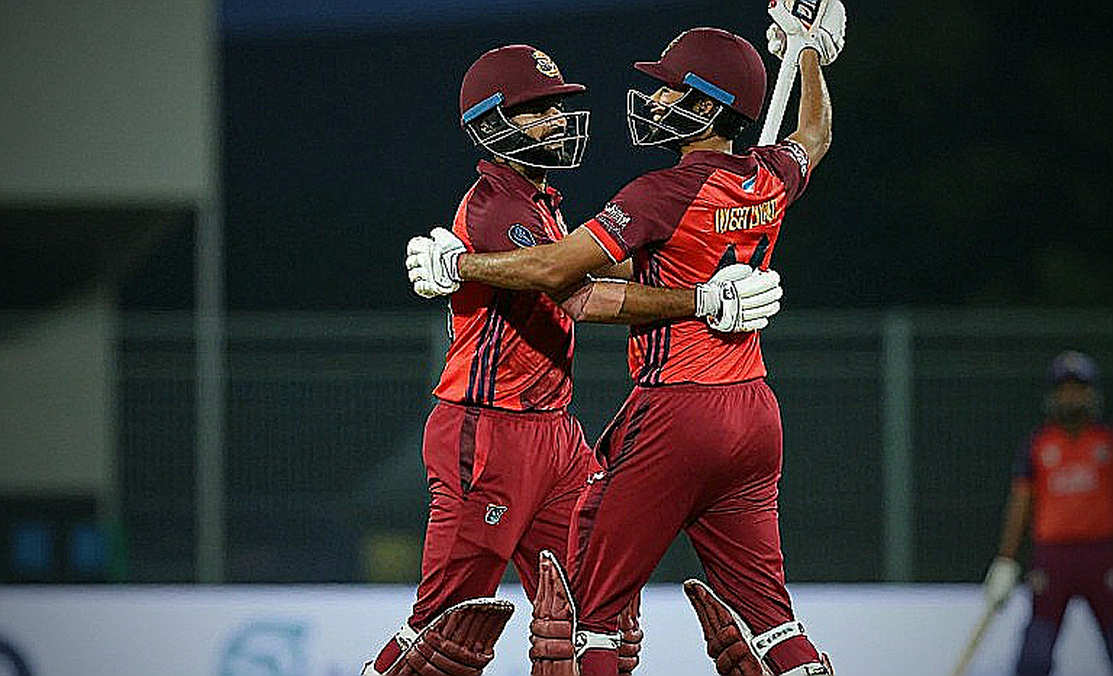
In Asia this method matters more, because copying the European model straight across goes wrong. Club football in Europe built its recovery maths on cold weather, thick grass and comparatively little travel. Asia inverts that: thirty-nine degrees Celsius, humidity above eighty per cent, and a three-hour flight between two host cities. The protocol that works in Amsterdam can fail in Chennai — because football and cricket load the body differently. A football hamstring fails in the sprint and the deceleration, in the run from box to box. A cricket hamstring fails at the last stage of the bowling action, when the front foot plants and the whole body's rotation is suddenly braked. Same name on the injury, two different mechanisms.
The heat and humidity of an Asian ground do more than make a player sweat. With the sweat go sodium, potassium and magnesium. Plasma volume drops, tissue compliance shifts, and the nerve-to-muscle signal arrives a fraction late. What happens to a fast bowler's body in that state I call heat debt. A bowling spell does not settle that debt the moment it ends. The real injury window is not the moment on the field; it is the thirty-six to forty-eight hours after it. Because that is when the bowler's body wants to rehydrate — and the schedule hands him another match, another flight, another net session.
In 2026, working remotely from Sydney for an Australian broadcaster during the Russia World Cup, I logged every soft-tissue injury across sixty-four matches. The data said that teams with three-day turnarounds suffered twenty-seven per cent more hamstring injuries than teams with four days or more. I published "The 72-Hour Problem" before the final. Two Premier League medical staff cited it. A veteran broadcaster said women don't understand tactics; I answered with a twelve-page data appendix. That episode led to an invitation to join a FIFA medical network as an observer. The same seventy-two-hour trap operates in Asian cricket — only more brutally, because here the franchise load and the national-team load run at the same time.
The cruelty of the calendar is visible in a simple sum. Say a quick plays twelve matches in six weeks in a franchise league, four overs a game — forty-eight overs. Immediately afterwards his national side announces a series of three Tests and three T20s. A Test spell has fewer overs, but each delivery carries far higher intensity, and the short gaps between matches do not let his body turn around. The error in workload management is made when someone counts only the overs and not the intensity of the deliveries or the gaps between matches. Read both numbers together and the picture changes: where over-count is high, gap-stress is low, and the reverse.
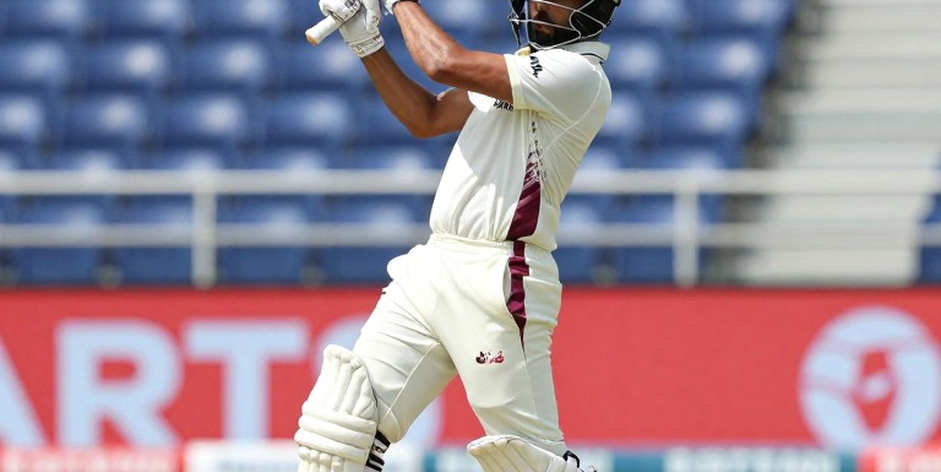
Asia has one more cause that rarely enters the conversation — fielding load. In a day-night match, once the dew settles, the ball grows wet and heavy, and a foot can slip on the grass. Every dive then costs the fielder more energy. Watching matches year after year, I have noticed that calf and ankle problems rise in the last ten overs of the second innings — the product not just of fatigue but of dew. That small insight is enough to show why tracking only bowling workload cannot prevent injuries.
Travel and sleep matter no less. A flight means dehydration, pressure in the legs and a disturbed circadian rhythm. Playing in two cities back to back cuts deep sleep, and deep sleep is when tissue repairs itself. Where a team's medical staff runs an RICE protocol without any deep-sleep data, recovery slows dramatically.
But here comes my strongest warning. In 2026, after the A-League was suspended, as team doctor liaison at Western Sydney Wanderers I helped draft a fourteen-page return-to-play protocol — five substitutions and a three-week pre-season. Once play restarted, five ACL ruptures occurred in ten matches. I reviewed each case methodically and found an odd combination of compressed schedules and empty stadiums — in an empty ground a player's normal cues of arousal and fear shift, and that mental state changes the way muscles are switched on. I wrote that warning for The Sydney Morning Herald, and the league kept five subs for 2026-21. From it I drew a personal rule: always compare a new injury with a previous cluster, or the pattern stays invisible.
Asia's soft-tissue problem is therefore not a personal weakness but the result of systemic overload — and a systemic problem cannot be solved by looking only inside one player's body.
Yet the most dangerous place is that, even with this data in hand, we still decide the other way. Franchise cricket is an economic system in which every match of a star quick means tickets, broadcast and sponsors. So the moment he is injured, the question becomes how soon he can be brought back. This is where the greatest danger is manufactured: a culture of rushing back.
I have repeatedly seen club and franchise press notes say "it is not a serious injury." But not serious does not mean not dangerous. A grade one tear that is not properly rehabilitated leaves scar, and that scar returns the next season as a grade two. Of the forty-two hamstring cases I reviewed in the 2026 A-League, a large share were re-injuries — the result of a first injury that did not heal in time. This is my core disagreement: an injury called "minor" and rushed back is in fact the most expensive injury of all, because its cost is only revealed the following season.
My second disagreement is about protocols. In Asia we routinely import hamstring-prevention protocols from Europe, but we do not import their underlying basis — temperature, travel volume, the gaps between matches. This is what I call protocol archaeology: finding out which protocol worked on which ground in which era, and which one we have copied blindly until it became dogma. A sprint-based football protocol dropped straight into cricket cannot capture the rotation-based load of bowling.
My third disagreement is about migration and load translation. A fast bowler raised in the humid heat of Bangladesh or the Indian subcontinent is used to playing in warmth; moving to Australia's hard, bouncy pitches in cold weather changes his tissue demand entirely. If that transition is not gradual, the body breaks down — and then people wrongly say "he is injury-prone." The truth is that his body is learning a new load in a new environment, and we are giving that learning process the wrong name.
Here I should stop and admit something honestly. Every one of my analyses carries uncertainty, and I do not hide it. I cannot say exactly which quick will break next season; I can say which calendar configuration raises the probability of injury. That distinction matters, because the injury-prone label puts the blame on a player when the blame lies more with the protocol and the schedule.
So what is the question looking forward? If Asian cricket truly wants to stop this cluster, the first task is to start writing about the schedule — not just the injuries. Every tournament preview should carry fixture density, travel distance and temperature data, as mine have since 2026. If we treat a fast bowler's body as a factory setting, our question changes too: not "how fast can he come back" but "how slowly can we bring him back so that he does not break again." The day an Asian franchise publishes its workload model before announcing its schedule, we may stop standing in a press box on an April night, staring at the field.